
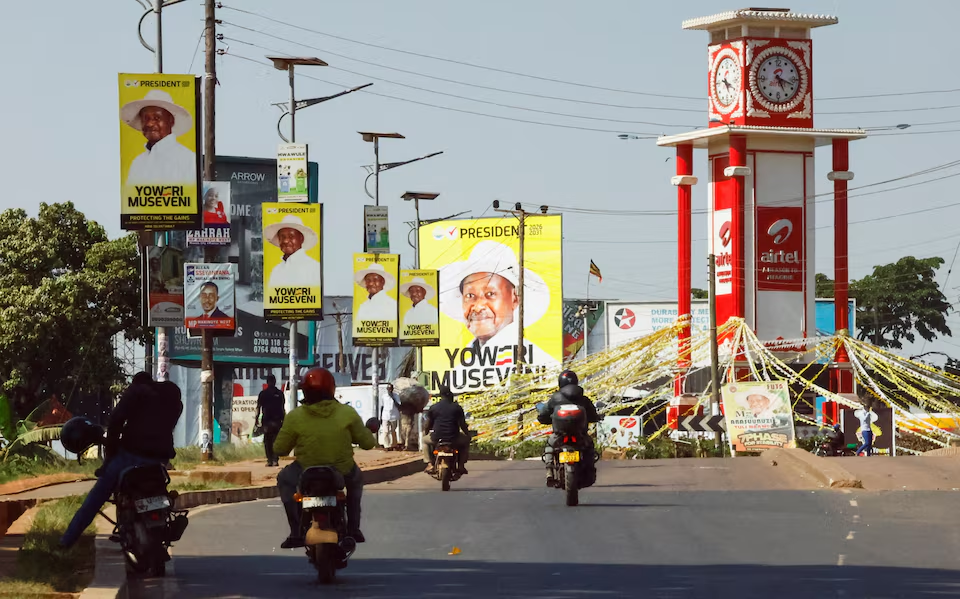

Ugandan authorities partially restored internet services late on Saturday, hours after President Yoweri Museveni was declared the winner of a disputed election that extends his rule into a fifth decade. While basic connectivity has resumed for businesses, access to social media platforms remains blocked, a move that has drawn criticism from opposition figures and election observers.
Users across the country reported regaining internet access around 11 p.m. local time. Several service providers informed customers that the national regulator had instructed them to restore connectivity, with the exception of social media services. A spokesperson for Airtel Uganda said the decision was aimed at allowing companies that depend on internet access to resume operations, while restrictions on social platforms would stay in place.
The state-run Uganda Communications Commission said the earlier shutdown was imposed to curb what it described as misinformation, disinformation and risks of electoral fraud. Opposition leaders, however, argued that the blackout was designed to restrict scrutiny of the vote and consolidate control over the electoral process.
Museveni, 81, was declared the winner of Thursday’s poll with 71.6% of the vote, according to the Ugandan authorities partially restored internet services late on Saturday, hours after President Yoweri Museveni was declared the winner of a disputed election that extends his rule into a fifth decade. While basic connectivity has resumed for businesses, access to social media platforms remains blocked, a move that has drawn criticism from opposition figures and election observers.
Users across the country reported regaining internet access around 11 p.m. local time. Several service providers informed customers that the national regulator had instructed them to restore connectivity, with the exception of social media services. A spokesperson for Airtel Uganda said the decision was aimed at allowing companies that depend on internet access to resume operations, while restrictions on social platforms would stay in place.
The state-run Uganda Communications Commission said the earlier shutdown was imposed to curb what it described as misinformation, disinformation and risks of electoral fraud. Opposition leaders, however, argued that the blackout was designed to restrict scrutiny of the vote and consolidate control over the electoral process.
Museveni, 81, was declared the winner of Thursday’s poll with 71.6% of the vote, according to the electoral commission. His main challenger, opposition leader Bobi Wine, received 24% and has rejected the result, alleging widespread fraud. The president has been in power since 1986 and, if he completes his new term, will have ruled Uganda for nearly 45 years by 2031.
International observers raised concerns over both the conduct of the election and the decision to shut down internet access. A joint observer mission from the African Union and regional bodies criticised the involvement of the military and said the internet blackout, implemented two days before the vote, limited access to information, disrupted economic activity and undermined public trust in the electoral process.
Tensions flared in parts of the capital following the announcement of the results. In Magere, a northern suburb of Kampala where Wine lives, small groups of protesters burned tyres and erected barricades, prompting police to respond with tear gas. Authorities said the demonstrations were dispersed and that arrests had been made, though they did not immediately disclose how many people were detained.
Wine’s whereabouts were unclear early on Sunday after he said on social media platform X that he had escaped a military raid on his home. Sources close to him said he was staying at an undisclosed location inside the country. He was briefly placed under house arrest after the previous election in 2021.
The opposition leader has accused security forces of detaining hundreds of his supporters in the months leading up to the vote and of subjecting others to torture. Government officials have denied the allegations, saying those arrested broke the law and would be handled through the legal system.
Museveni, one of Africa’s longest-serving leaders, is widely believed to be preparing his son, Muhoozi Kainerugaba, the current head of the military, for a future leadership role. As Uganda moves forward from the vote, critics say the partial restoration of internet access does little to ease concerns about political freedoms and transparency following another contentious election.commission. His main challenger, opposition leader Bobi Wine, received 24% and has rejected the result, alleging widespread fraud. The president has been in power since 1986 and, if he completes his new term, will have ruled Uganda for nearly 45 years by 2031.
International observers raised concerns over both the conduct of the election and the decision to shut down internet access. A joint observer mission from the African Union and regional bodies criticised the involvement of the military and said the internet blackout, implemented two days before the vote, limited access to information, disrupted economic activity and undermined public trust in the electoral process.
Tensions flared in parts of the capital following the announcement of the results. In Magere, a northern suburb of Kampala where Wine lives, small groups of protesters burned tyres and erected barricades, prompting police to respond with tear gas. Authorities said the demonstrations were dispersed and that arrests had been made, though they did not immediately disclose how many people were detained.
Wine’s whereabouts were unclear early on Sunday after he said on social media platform X that he had escaped a military raid on his home. Sources close to him said he was staying at an undisclosed location inside the country. He was briefly placed under house arrest after the previous election in 2021.
The opposition leader has accused security forces of detaining hundreds of his supporters in the months leading up to the vote and of subjecting others to torture. Government officials have denied the allegations, saying those arrested broke the law and would be handled through the legal system.
Museveni, one of Africa’s longest-serving leaders, is widely believed to be preparing his son, Muhoozi Kainerugaba, the current head of the military, for a future leadership role. As Uganda moves forward from the vote, critics say the partial restoration of internet access does little to ease concerns about political freedoms and transparency following another contentious election.
