
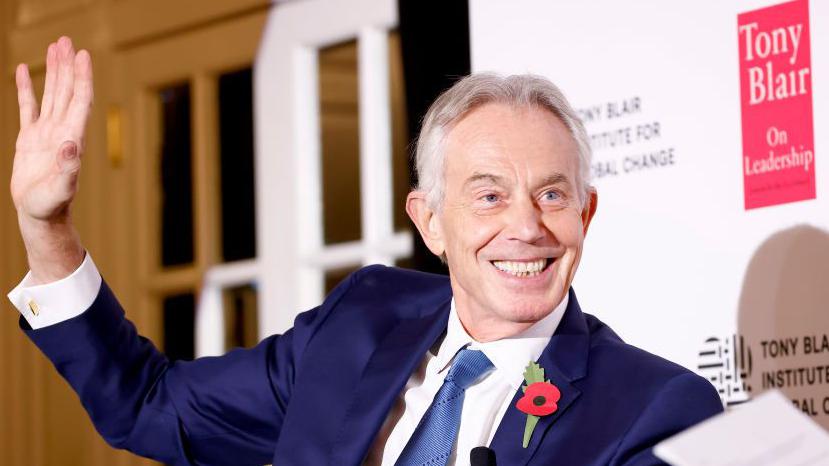

President Donald Trump just dropped a new plan for Gaza, putting former British Prime Minister Tony Blair right at the heart of postwar governance. The White House wants Blair as interim administrator of Gaza, running things under a United Nations-backed transitional authority. He’d oversee a so-called “Board of Peace” to govern the territory—if Israel and Hamas ever actually agree to a ceasefire.
Blair’s been working on post-conflict plans for Gaza for months, talking with Trump’s son-in-law Jared Kushner about what the administration wants for the region.
He’d lead an international body tasked with managing Gaza’s transition and rebuilding after the war.
This plan marks a big shift in how the world might handle Gaza’s future. It’s tangled—regional support, international oversight, and the gritty reality of running one of the planet’s most contested places all come into play.
Trump Plan for Gaza
Trump rolled out a 20-point plan to set up a new governing structure for Gaza if Hamas is ousted.
The plan calls for creating the Gaza International Transitional Authority, with a bunch of conditions attached.
Purpose and Goals of the Initiative
The Trump team says this plan is about ending the Israel-Hamas war and giving Gaza some kind of stable government.
They want Hamas out, but they’re also keen to avoid direct rule by Israel or the Palestinian Authority.
Main goals:
- End the fighting between Israel and Hamas.
- Put Gaza under temporary international control.
- Build a base for long-term peace.
Unlike earlier proposals, this one jumps straight into postwar governance.
Trump said if Hamas turns down the deal, he’d back Netanyahu in dismantling the group for good.
The plan tries to keep Gaza from falling back into militant hands and promises humanitarian aid for people stuck in the Strip.
Key Provisions of the Transitional Authority
The Gaza International Transitional Authority would take over from both Hamas and the Palestinian Authority.
Tony Blair could end up leading this new body.
The setup looks like this:
- International oversight board with regional voices.
- Temporary administration for a few years, not forever.
- Gradual handover of power to locals.
Blair’s got history in Middle East peace deals. His own 21-page blueprint shaped a lot of what Trump is now pitching.
The authority would handle day-to-day life in Gaza—public services, security, rebuilding the place.
Several countries would join the governing board, but who exactly signs on depends on how much regional buy-in Blair and Trump can get.
Conditions for Implementation
Hamas would have to give up control of Gaza entirely. Netanyahu and Israel would need to agree to this international arrangement instead of running things themselves.
Key requirements:
- Hamas disarms and leaves.
- Israel accepts international oversight.
- Arab states join in.
- Palestinian Authority helps out.
Trump told Blair to get regional support lined up. Both Arab and Israeli leaders need to sign off on the transitional authority.
The White House is after solid backing from Middle Eastern allies. Without it, this whole international authority idea probably falls apart.
They’ll also need a steady flow of international funding. Rebuilding and running Gaza won’t come cheap.
Tony Blair’s Proposed Role in Postwar Gaza
Tony Blair would sit on a high-level board overseeing Gaza’s reconstruction and government after the war.
His role pulls heavily from his own 21-page plan that influenced much of Trump’s proposal.
Responsibilities as Transitional Leader
Blair would help launch and run the Gaza International Transitional Authority, focusing on rebuilding basic services.
That includes health care, schools, and police for people in Gaza.
He wants a Palestinian executive authority to handle daily operations, working with locals instead of outsiders.
The transitional government would have to work with the Palestinian Authority on security.
Disarming militants is going to be one of Blair’s biggest headaches.
Blair’s time brokering the Good Friday Agreement in Northern Ireland gives him a playbook for this kind of job.
The Tony Blair Institute for Global Change already works with dozens of countries. Maybe that network helps with Gaza, too.
Involvement in Drafting the Peace Plan
Blair spent months drafting his own Gaza peace plan before Trump rolled out the official version.
Most of Trump’s 21-point plan echoes Blair’s original ideas.
He was almost tapped for a leadership role in the process, but Trump slid himself into the chairman’s seat at the last minute.
Blair worked closely with Jared Kushner to hammer out the details.
After the election, Blair shifted his lobbying from the Biden folks to Trump’s team.
He traveled to the UAE to get Arab leaders on board. His years as the Quartet’s Middle East envoy helped open some doors.
Relationship with International Partners
Blair’s got ties all over the Middle East from his seven years as the Quartet’s rep.
The Quartet—U.S., U.N., EU, and Russia—gave him a lot of access.
He still visits Jerusalem and Arab capitals to talk peace. These relationships might be the key to getting regional buy-in for the Gaza plan.
Larry Ellison, the Silicon Valley billionaire, donates to the Tony Blair Institute. That kind of support could fund some rebuilding in Gaza.
Blair’s been telling regional leaders Gaza could be a model for a future Palestinian state.
He’s pushed this idea since he hosted a London conference back in 2005, after Israel pulled out of Gaza.
The Tony Blair Institute gives him a platform and resources for this mission.
Structure and Governance of the Transitional Authority
The Gaza International Transitional Authority would run on a three-tier system: international oversight, Palestinian local governance, and multinational security.
It’s meant to give the whole thing legitimacy and keep things running during the transition.
Composition of the Board of Peace
The Board of Peace would be the top governing body for the transitional authority.
It’d have seven to ten members from the U.N., international community, and Palestinian civil society.
Main powers:
- Make binding decisions
- Approve laws
- Appoint key officials
- Set the big-picture strategy
The board chairman would get help from a Strategic Secretariat of up to 25 people.
Trump’s open to chairing this “Board of Peace,” with Blair as a member.
An Executive Secretariat would handle the authority’s day-to-day operations.
This board setup borrows from past UN missions in Kosovo, East Timor, and Cambodia.
Role of Palestinian Technocrats
Palestinian technocrats would handle daily governance through an Executive Authority.
They’d run ministries like health, education, finance, infrastructure, courts, and welfare.
A Palestinian CEO, picked by the board, would lead this executive team.
The Palestinian Authority could send a commissioner to coordinate with the transitional authority.
Local setup:
- Five governorates: Gaza City, Khan Yunis, North Gaza, Deir al-Balah, Rafah.
- Municipal services stick with current mayors.
- Executive Authority nominates municipal administrators.
An independent court system would run under an Arab jurist-led Judicial Board.
Hamas would be totally shut out of governance roles.
International Oversight and Multinational Forces
Security would come from an Arab-led International Stabilization Force during the transition.
Israeli forces would leave once peacekeepers arrive.
Security details:
- Executive Protection Unit: Elite teams from Arab and international partners.
- Gaza Civil Police Force: Nonpartisan, professionally vetted officers.
- Multinational oversight: For safety and order.
Five commissioners would handle humanitarian aid, rebuilding, legal affairs, security, and PA relations.
The authority would start out in El-Arish, Egypt, with hubs in Cairo or Amman, and move into Gaza City as things stabilize.
Regional and International Reactions
Trump’s idea to put Tony Blair in charge of Gaza’s transition has gotten a mixed bag of reactions from the region.
Israeli officials sound cautious, and Palestinian groups are loudly rejecting the idea of outsiders running Gaza.
Israeli Government’s Position
The Israeli government seems cautiously interested in the Blair plan, but only if there’s strong international support.
Netanyahu’s team says any new Gaza setup must keep Hamas out of power.
They’re not budging on border security, either.
Israel insists it won’t pull out of Gaza until there are solid security guarantees.
That means making sure militant groups can’t rebuild.
Netanyahu’s office says they’ll work with international partners, but only if the transitional authority is serious about dismantling terrorist networks.
Israeli defense officials want Blair’s administration to coordinate closely with Israeli security forces.
They see this as crucial for any shot at lasting peace.
Response from Hamas and Palestinian Factions
Hamas has flat-out rejected the plan, calling it foreign meddling.
They say Blair’s appointment is illegitimate.
Palestinian Authority officials are split—some like the idea of international oversight, others hate the thought of outsiders running Palestinian land.
Hamas leaders insist they won’t recognize any authority forced on them.
They argue Palestinians must choose their own leaders.
Palestinian factions across the board are angry about being left out of the proposal’s development.
A lot of them feel it undermines Palestinian self-determination.
The Palestinian Authority says Palestinians have to be at the center of any post-war plans.
They want Palestinian institutions to run Gaza’s future.
Perspectives from Arab States
Arab countries have shown different levels of support for international involvement in Gaza.
Some see Blair’s experience as an asset.
Egypt is especially interested, mainly because of border security.
They think international oversight might help keep things calm on their side.
Saudi Arabia and the UAE say they’d chip in money for rebuilding, but want assurances it won’t end up with militants.
Jordan’s got concerns about how fast the plan rolls out and whether Palestinians are truly represented.
They stress Palestinian self-rule has to be the endgame.
Arab leaders across the region say any international administration should be temporary.
They want it to lead toward Palestinian statehood, not away from it.
Challenges and Controversies Surrounding the Plan
The Trump Gaza plan faces serious pushback.
Blair’s reputation took a big hit from the Iraq War, and there’s deep mistrust of Western-led peace efforts.
Many Palestinians and Arab leaders think Blair’s the wrong choice, and security experts have doubts about the plan’s feasibility.
Concerns Over Blair’s Iraq War Legacy
Blair’s role in the 2003 Iraq invasion is a huge problem for this plan.
He led the UK into war on shaky claims about weapons of mass destruction.
That war dragged on for eight years, killed about 200,000 Iraqi civilians, and cost the lives of 179 British and nearly 4,500 American troops.
A British inquiry slammed Blair for having a weak legal case for the war.
A lot of people in the Arab world now call him a war criminal.
Palestinians especially don’t trust him because of Iraq.
One official said when people hear Blair’s name, they think “Iraq War” first.
The war wrecked Blair’s reputation so badly he had to step down as Prime Minister in 2007.
His approval ratings tanked.
Skepticism Toward Western Intervention
Plenty of Palestinians flat-out reject Western control over Gaza.
They see Blair’s appointment as just another round of colonialism.
One leader said, “We’ve been under British colonialism already.”
They want their own leaders, not foreign ones.
Blair’s earlier stint as Middle East peace envoy didn’t stop Israeli settlements or make much progress toward a Palestinian state.
Critics say he focused too much on economic projects and skipped the real political work.
His business deals while serving as envoy raised eyebrows about conflicts of interest.
People couldn’t tell if they were meeting Blair the diplomat or Blair the businessman.
Hamas hasn’t signed on to the plan.
They’d have to give up power to Blair, which seems like a long shot given how much Arab distrust he faces.
Humanitarian and Security Risks
The plan wants the Israeli military to slowly hand over Gaza to international forces.
That’s a risky move—security gaps could open up.
Gaza’s got 2.3 million people crammed into a battered, war-torn strip.
Pulling out Israeli troops and bringing in new security teams is a logistical nightmare.
International forces would need to train Palestinian police while keeping the peace.
Past peacekeeping missions in the region haven’t exactly gone smoothly.
The plan splits Gaza from the West Bank politically, which might kill any chance for a future Palestinian state.
That’s a big worry for Palestinians.
Some fear the real motive is to push them out of Gaza for good.
Earlier Trump comments about relocating Palestinians only make those fears worse.
Implications for Gaza’s Future and the Peace Process
Trump’s Gaza plan lays out a structure that could change how Palestinians are governed and shake up the region.
It carves out a path for eventual Palestinian control, but leans hard on international oversight and big reconstruction efforts.
Pathways to Palestinian Self-Governance
The Trump plan lays out a multi-stage transition for Palestinian self-governance in Gaza. First, the Palestinian Authority would need to reform before it can take over from the interim administration.
Palestinian technocrats would run daily operations during the transition. Still, the Board of Peace, led by Trump and Tony Blair, would keep oversight.
The plan says Hamas must fully disarm and dismantle its military infrastructure. If Hamas members pledge peaceful behavior, they’d get amnesty.
Key transition elements include:
- Training Palestinian police forces to replace international security personnel
- Setting up reformed Palestinian Authority governance structures
- Creating accountability mechanisms for the interim administration
Egypt is already training thousands of Palestinian police officers for deployment. That move suggests they’re serious about the transition timeline.
The Palestinian Authority has to want these reforms for self-governance to work. Internal resistance has tripped up past reform efforts.
Potential for a Two-State Solution
The plan gives only vague promises about Palestinian statehood. It says that if the Palestinian Authority reforms and Gaza gets redeveloped, “Palestinian self-determination and statehood” could become possible.
Netanyahu’s government has pushed back hard against any Palestinian state. Israeli officials have shot down two-state proposals more than once in recent years.
There’s no mention of concrete steps toward statehood recognition. The plan doesn’t offer a timeline for when those talks might even start.
Current obstacles to statehood include:
- Israeli government opposition to Palestinian state recognition
- Hamas still controlling Gaza territory
- Disputes over Jerusalem and West Bank settlements
- Lack of unified Palestinian leadership
Some Arab countries, like Egypt and the United Arab Emirates, have shown support for the plan’s framework. They seem to think it might help regional peace efforts, at least in theory.
The UN General Assembly has backed Palestinian statehood recognition before. But making it happen still depends on cooperation from key regional powers and, of course, the United States.
Role of International Organizations in Reconstruction
International organizations will play a central role in Gaza’s reconstruction and humanitarian work. The UN and Red Crescent plan to handle most of the large-scale aid distribution.
The Board of Peace steps in to supervise decisions about reconstruction funding. That means international leaders will have a lot of say over how Gaza develops from here.
Neutral international bodies are set to replace the Hamas-run aid systems. The goal here is to keep militant groups from grabbing control of resources.
Reconstruction priorities include:
Rebuilding destroyed housing and infrastructure
Setting up new healthcare and education systems
Creating economic opportunities for Gaza’s population
Ensuring sustainable water and energy supplies
The plan makes it clear: no Palestinian expulsion from Gaza. That part tries to calm fears about forced population transfers in the region.
International security forces will keep order during the rebuilding phase. Over time, they’ll hand off those duties to trained Palestinian police units.
Reconstructing Gaza will need huge funding from the international community. The whole effort pretty much hinges on steady financial support from donor countries and organizations.
