

Australia’s eSafety Commissioner Julie Inman Grant dismissed claims from major U.S. tech companies that the country is overreaching as it launches its new ban on social media for users under 16. Speaking to Reuters in Sydney, she said the criticism reflects a broader belief among American platforms that digital products should be treated differently from any other imported item subject to safety rules.
Her comments come as Australia enforces what it calls a world-first measure requiring platforms to block people younger than 16 from opening accounts. Inman Grant said she has been hearing a very different message from many U.S. families. According to her, a growing number of American parents say they wish similar protections existed in their own country, where proposals for minimum age limits often stall in court.
Growing scrutiny of platforms as global interest rises
The tough stance has drawn attention far beyond Australia. A U.S. congressional committee has already asked Inman Grant to testify, framing her as a foreign official challenging the First Amendment. She told Reuters that this reaction contrasts sharply with the support she receives from American citizens who feel abandoned by policymakers as social media harms, including bullying, body-image pressure and radicalisation, continue to rise.
Inman Grant, who previously worked at Microsoft and Twitter before becoming Australia’s first internet regulator in 2017, argued that countries routinely impose safety standards on foreign goods such as cars and medication. She said it is “technological exceptionalism” for companies to insist digital platforms should avoid similar oversight.
Several governments in Europe and Asia have already signaled interest in following Australia’s model. The United States, however, remains cautious. Attempts by individual U.S. states to impose age restrictions have been blocked in the courts, and a federal bill with safety requirements for minors has not passed after three years of debate.
Even so, Inman Grant noted signs of gradual alignment. She told Reuters that she has worked with the U.S. Department of Homeland Security on tools to combat child sexual abuse material. She also pointed to the Take It Down Act, signed by President Donald Trump in May — which bans AI-generated deepfakes and mirrors parts of Australia’s long-standing approach.
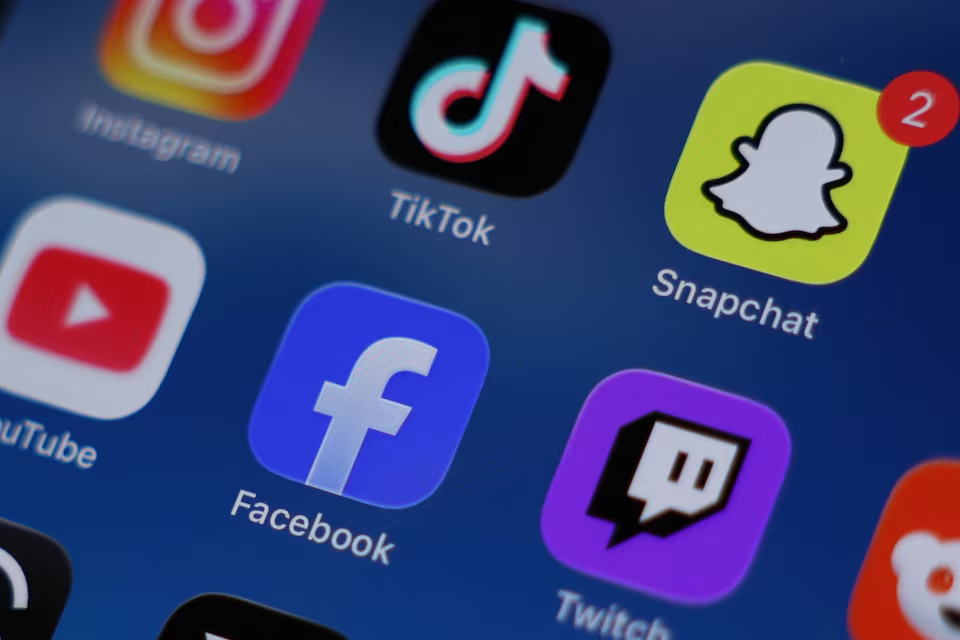
Under the new Australian law, ten major platforms, including Instagram, TikTok, Snapchat and YouTube, have pledged to comply. But Inman Grant acknowledged that enforcement remains difficult, especially if companies quietly ignore violations once the immediate scrutiny fades.
For now, she said, the ban marks a shift in expectations about how platforms should treat young users. Australia, she added, is simply drawing a line after years of design practices that keep children glued to their screens.
