

Slovenia is preparing draft legislation that would ban children under the age of 15 from accessing social media platforms, marking another step in Europe’s growing push to regulate technology seen as harmful to young users. The proposal was confirmed on Thursday by Deputy Prime Minister Matej Arcon, who said the government is responding to rising concerns about the impact of social networks on children and adolescents.
The initiative is being led by the Education Ministry and will involve experts in education, child development and digital technologies. According to Arcon, the goal is to design a framework that reflects lessons learned from other countries that have already moved to restrict youth access to social media. He said the issue has gained urgency across Europe in recent months, prompting governments to reconsider how platforms designed for constant engagement affect children’s wellbeing.
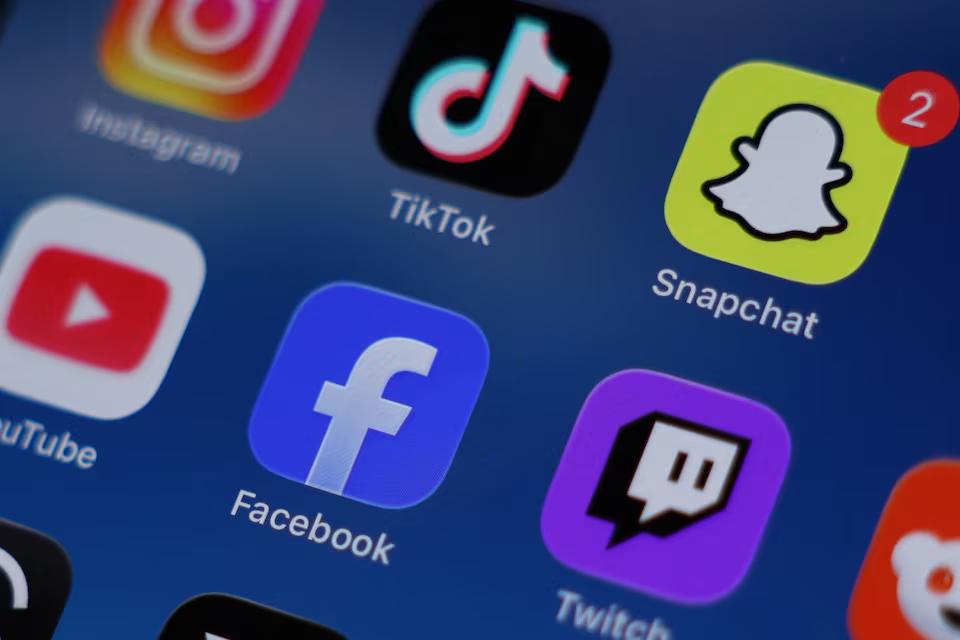
Slovenia, a country of about two million people, would join a small but growing group of nations seeking age-based restrictions on social platforms. Officials said the draft law would focus on networks built around user-generated content, specifically naming platforms such as TikTok, Snapchat and Instagram as examples of services that would fall under the proposed rules.
A wider European shift on social media and children
The move comes amid a broader reassessment across Europe of how to regulate social media use among minors. Earlier this week, Spain proposed banning access to social platforms for children under 16, while Greece is preparing similar legislation that would restrict use for those under 15, according to government sources. The proposals reflect a hardening stance among policymakers who argue that many platforms are intentionally designed to be addictive and can negatively affect mental health, concentration and social development.
Other European governments are also exploring tougher measures. Britain and France have both signaled they are considering stronger regulations, following Australia’s decision in December to become the first country to prohibit access to social media for children under 16. That move intensified international debate over whether age limits should be enforced by governments rather than left to parental controls or platform self-regulation.
In Slovenia, Arcon framed the proposal as part of a wider effort to protect children in a rapidly changing digital environment. He said the government wanted to demonstrate that it takes concerns about online harm seriously, while still consulting specialists to ensure the legislation is practical and enforceable.
Details of how the ban would be implemented, including age verification mechanisms and penalties for non-compliance, have not yet been made public. Officials said those questions would be addressed during the drafting process, as Slovenia studies approaches adopted elsewhere and weighs potential legal and technical challenges.
If adopted, the law would place Slovenia among the most restrictive countries in Europe when it comes to youth access to social media, underscoring a shift toward stronger state intervention in the digital lives of children.
