
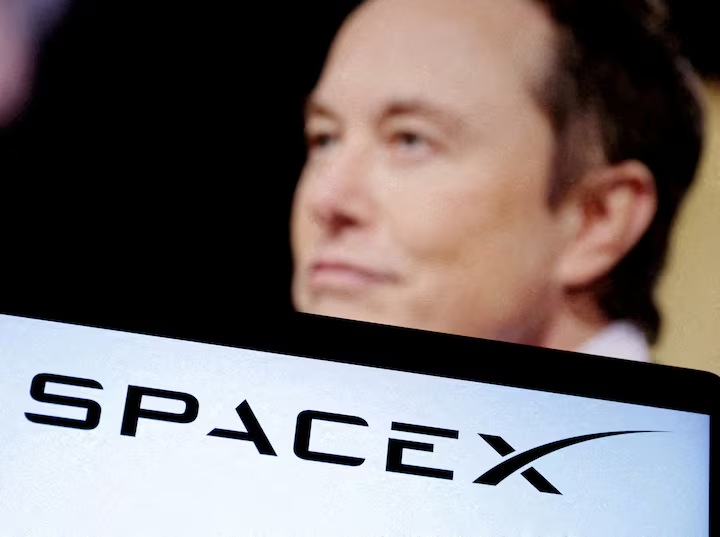

Shares of US-listed space companies moved higher on Tuesday after Elon Musk announced a landmark merger between SpaceX and artificial intelligence firm xAI, valuing the combined business at $1.25 trillion and fueling optimism about the future of space-based AI infrastructure.
The deal, confirmed by Musk, brings together two of the world’s largest privately held technology companies and reflects an ambitious vision to expand artificial intelligence capabilities beyond Earth. Investors responded positively, pushing up shares across the space sector as markets assessed the broader implications of the move.
Musk said the merger is designed to create a vertically integrated platform that combines rocket launches, satellite networks, AI systems and communications services. He has argued that within the next two to three years, generating AI computing power in space could become more cost-effective than on Earth, particularly as major technology companies pour hundreds of billions of dollars into the race to develop more advanced AI systems.
Following the announcement, shares of Rocket Lab rose nearly 4%, while Planet Labs gained more than 1%. AST SpaceMobile advanced over 4%, Intuitive Machines climbed close to 5%, and Redwire posted gains of around 2%, reflecting renewed investor interest in companies positioned across the space technology ecosystem.
The merger comes as SpaceX prepares for a potential initial public offering later this year. Sources familiar with the matter have said such a listing could value the company at more than $1.5 trillion, raising the prospect of what could become the largest IPO in history. Analysts said the SpaceX-xAI combination may further heighten anticipation ahead of any public offering.
Industry executives see the deal as a strong signal of how central space infrastructure could become to the next phase of artificial intelligence development. Mark Boggett, chief executive of investment firm Seraphim Space, said the move reinforced the idea that space will serve as the backbone for future AI growth, particularly as governments and private companies ramp up spending on satellite systems and launch capabilities.
Musk said the combined entity would aim to integrate AI with space-based internet services, direct-to-mobile communications and real-time information platforms. The plan builds on SpaceX’s existing satellite ambitions through its Starlink network and aligns with xAI’s push to scale computing power rapidly.
The announcement also drew attention to the scale of Musk’s broader business ambitions. While he has a track record of bold promises that sometimes take longer to materialize, his companies span electric vehicles, brain-computer interfaces, tunneling technology and now increasingly, artificial intelligence. Critics have pointed to delays in projects such as Tesla’s full self-driving technology, while supporters argue that long timelines are inherent to transformative innovation.
SpaceX has already taken steps toward its space-based computing goals, including seeking regulatory approval to launch a vast satellite constellation designed to support orbital data centers powered by solar energy. Analysts have estimated that maintaining such a network would require launching hundreds of thousands of satellites each year, underscoring the immense capital demands of the project.
Some market watchers say those costs could eventually push SpaceX toward public markets to raise additional funding. For now, however, the merger with xAI has injected fresh momentum into US space stocks and sharpened investor focus on how artificial intelligence and space technology may converge in the years ahead.
