
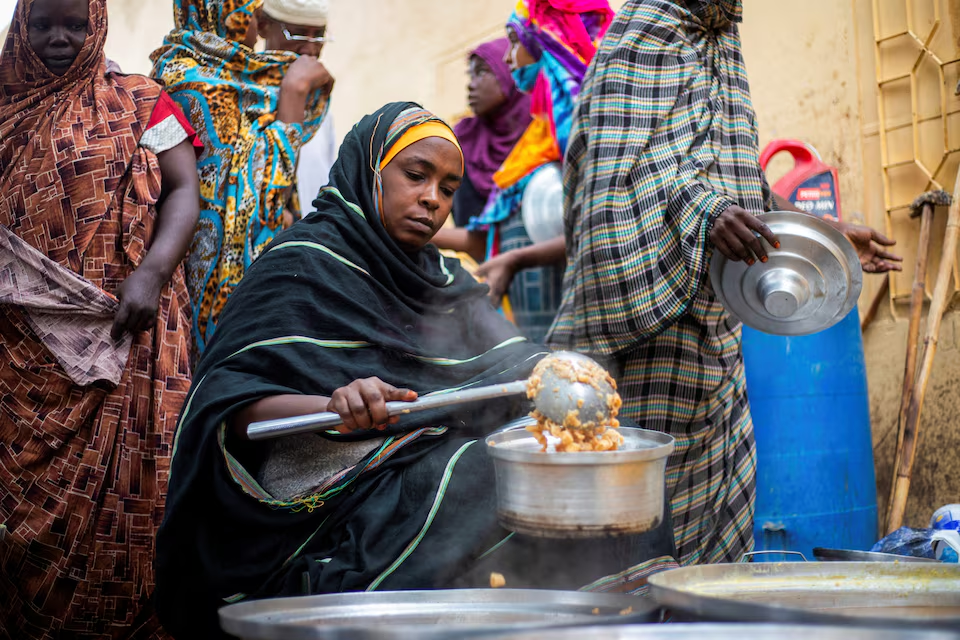

Women are disproportionately affected by Sudan’s escalating humanitarian emergency, with female-headed households facing sharply higher levels of hunger as the country’s conflict grinds on, the United Nations said on Friday. The warning comes as fighting enters its 1,000th day and food insecurity reaches levels that aid agencies describe as catastrophic.
Speaking to reporters in Geneva, Jens Laerke, spokesperson for the United Nations Office for the Coordination of Humanitarian Affairs, said female-headed households are now three times more likely to be food insecure than those led by men. According to UN data, roughly three quarters of these households report not having enough food to eat, highlighting how existing gender inequalities have been intensified by prolonged violence and economic collapse.
Laerke said hunger in Sudan is becoming increasingly “gendered,” as women are often the last to eat, have fewer income opportunities, and face heightened risks while searching for food. UN Women has previously warned that women and girls are particularly vulnerable to sexual violence when they leave their homes in search of basic supplies, a threat that has grown as resources become scarcer.
The crisis has been exacerbated by the expansion of fighting into key urban centers. UN agencies are calling for immediate international action to deliver assistance to the Darfur city of al-Fashir, which fell to the Rapid Support Forces in late October after an 18-month siege. Kadugli, a besieged city in southern Sudan, is also facing famine conditions, according to humanitarian officials.
More than 100,000 people are estimated to have fled al-Fashir since the paramilitary takeover, adding to the strain on already overstretched communities and aid networks. Access remains severely limited, complicating efforts to deliver food, medicine and other essential supplies to civilians trapped in conflict zones.
Across the country, the scale of need continues to grow. The UN estimates that more than 21 million people in Sudan are currently acutely food insecure. Around 34 million people require humanitarian assistance, roughly half of them children, underscoring the long-term impact the crisis is likely to have on an entire generation.
OCHA said it is exploring an agreement that would make Sudan the first country to formally receive part of the $2 billion in humanitarian assistance pledged by the United States at the end of December. However, officials cautioned that funding alone will not be sufficient without improved access and security guarantees for aid workers.
International humanitarian staff were able to enter al-Fashir for the first time since its takeover in December, but OCHA said it does not yet have updated plans for further visits. As fighting continues and supply lines remain cut, UN officials warn that delays in aid delivery could push more communities, particularly those led by women, into famine conditions in the coming months.
