
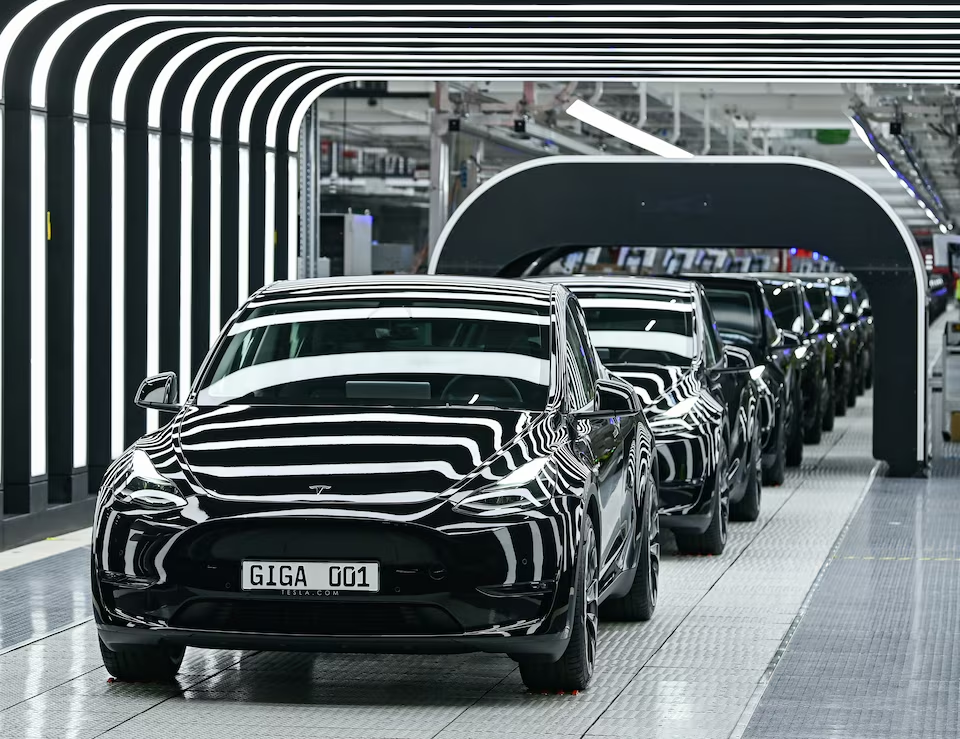

Tesla faced a steep drop in new registrations across several major European markets in November, highlighting a difficult stretch for the U.S. electric-vehicle maker as competition intensifies and consumer sentiment shifts. Official data showed that registrations fell by more than half in France and Sweden, with similar declines in Denmark, Portugal and the Netherlands. The downturn continued Tesla’s broader slide in Europe, even as the company rolled out updated versions of its Model Y.
The brand did find pockets of strength. Registrations surged in Norway and saw notable growth in Italy, although year-to-date performance there remains negative. These gains, however, were not enough to offset the broader regional decline.
A difficult year for Tesla as competition grows and politics intrude
The numbers reveal how sharply Tesla’s presence has weakened. France recorded a 58% drop to 1,593 new registrations. Sweden posted a 59% decline to 1,466, while Denmark fell 49% to 534. The Netherlands dropped 44% to 1,627, Portugal slid 47% to 425, and Spain slipped 9% to 1,523.
Norway moved in the opposite direction. Registrations nearly tripled to 6,215 units, setting a new annual record even before December. Italy also rose 58% to 1,281 vehicles.
Tesla’s overall European market share fell to 1.6% from 2.4% a year earlier, according to year-to-October data. Analysts say the decline began late last year after Elon Musk publicly praised right-wing political figures, triggering protests in parts of Europe and creating reputational challenges for the company. Although Musk has since scaled back political commentary, the brand has not regained momentum.
In November, a fire at a Tesla dealership in southern France prompted a criminal investigation, adding fresh pressure at a sensitive moment for the company.
Market experts also point to deeper structural challenges. Tesla’s lineup is aging in a market filled with aggressive new entrants from China, including BYD, whose hybrid and plug-in hybrid models have gained traction as European consumers look for alternatives to fully electric cars. BYD posted record sales in several European markets last month, reflecting a shift in preferences and intensifying price competition.
Consumer perception is shifting as well. A new study from Escalent, reviewed by Reuters, found that 38% of respondents in Europe’s five largest car markets felt the brand’s “novelty” had faded and believed Tesla lagged rivals on design and perceived quality.
Tesla did attempt to spark new interest by launching a cheaper version of the Model Y priced at 40,000 euros in Germany. However, only a limited number of units reached Europe by the end of November. As a result, Model Y sales dropped sharply across most markets: down 67% in Sweden, 62% in the Netherlands, 55% in Portugal, 44% in Italy and 74% in Denmark. Norway again proved to be an outlier, with sales rising 19% to 3,648.
Tesla now enters the final month of the year facing rising pressure from competitors, shifting consumer tastes and the lingering impact of political controversies. Whether the cheaper Model Y or upcoming models can reverse the trend remains a central question for investors and industry analysts.
