
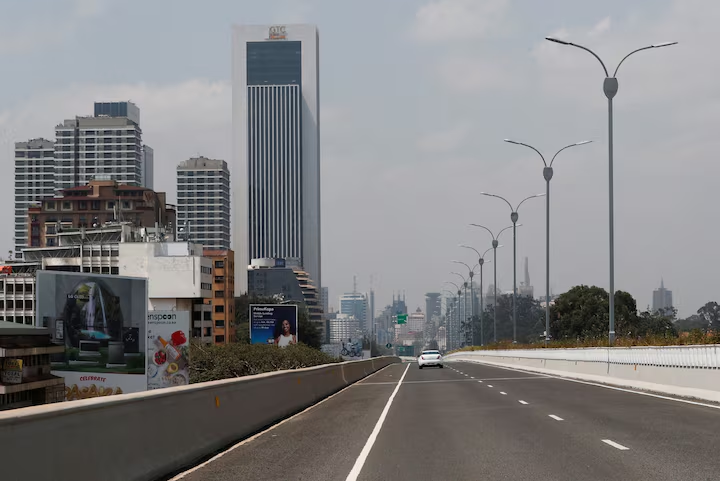

Kenya is moving ahead with a major $1.5 billion highway expansion after striking a new deal with Chinese state-owned firms, marking Beijing’s return to large-scale infrastructure projects in the country. The project offers a new financing model that blends debt and equity, an approach Kenyan officials say is necessary at a time when the government cannot take on new loans.
The agreement brings China back into Kenya’s development landscape after several years of reduced lending, driven by growing concerns over high debt levels in countries across Africa.
A new financing strategy as China recalibrates its role in Africa
Construction begins Friday on two major highway segments connecting the port of Mombasa to Kenya’s western region and neighboring landlocked states, including Uganda. The route runs through Nairobi and remains one of East Africa’s most strategic transport corridors.
Kefa Seda, director general of Kenya’s Public-Private Partnerships Directorate, said the country no longer has room for traditional borrowing, making a PPP structure essential. The project will rely on a mix of loans and equity contributions, with China Road and Bridge Corporation partnering with Kenya’s state pension fund, NSSF, to widen 139 kilometers of highway into four- and six-lane dual carriageways.
A second phase, led by Shandong Hi-Speed Road and Bridge International, will upgrade another 94-kilometer section into a six-lane route. Together, the two phases include financing costs and total roughly $1.5 billion. Each segment will use a 75% debt and 25% equity structure. NSSF will provide nearly half of the equity on the portion it supports.
Kenya abandoned an earlier deal with a consortium led by France’s Vinci following delays and disagreements. The new agreement was finalized during President William Ruto’s state visit to Beijing in April, part of a broader diplomatic shift that sparked frustration in Washington. Ruto defended the move, arguing Kenya must pursue market access and investment opportunities where they exist—including China.
China has been re-evaluating its approach to African infrastructure since 2019, when concerns about debt sustainability prompted Beijing to pull back on large-scale lending. However, China pledged $50 billion in African credit and investment at a summit with regional leaders last year, signaling its intent to remain a major player.
Under the new arrangement, construction must be completed by the end of 2027. After that, the developers will hold a 28-year concession to collect tolls and recover their investment.
The financing strategy marks a shift for Kenya and could serve as a blueprint for future projects as governments across Africa balance infrastructure needs with tightening fiscal space.
