
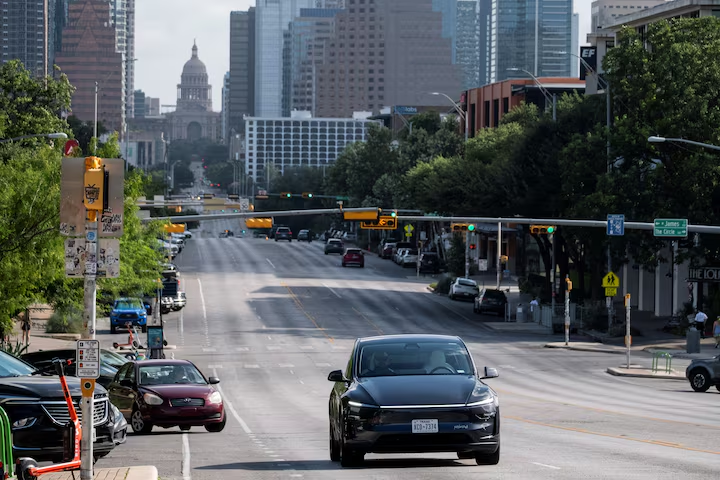

Elon Musk announced on Tuesday that Tesla plans to expand its robotaxi presence in Austin next month, signaling another push by the company to accelerate its self-driving rollout. The service launched in the Texas capital in June and has become a central part of Musk’s broader strategy to scale Tesla’s autonomous fleet across the United States.
Musk shared the update in a brief post on X, the social media platform he owns. He did not specify the fleet’s current size, although Tesla’s robotaxis remain limited to a small number of test vehicles with human safety monitors on board.
A growing competition for autonomous ride-hailing
Tesla’s robotaxi program now operates in Austin and the San Francisco Bay Area. The company also secured approval last week to launch ride-hailing operations in Arizona, which Musk has described as a key market for testing regulatory flexibility. He has repeatedly said he expects the cars to drive without safety operators in large sections of Austin before the end of the year.
Throughout 2025, Musk outlined ambitious goals for the autonomous service. In July, he said robotaxis could reach half of the U.S. population by year-end and operate in eight to ten major metropolitan regions. Those targets raised expectations for an industry that has struggled with high costs, regulatory obstacles, and federal investigations.
Even so, the landscape is shifting. Tesla, Alphabet’s Waymo, and Amazon-backed Zoox have all expanded their testing zones and pilot programs, reviving momentum in a sector that faced serious setbacks only a few years ago. Tesla’s decision to double its Austin fleet adds pressure to competitors and signals that the company intends to speed up deployment despite lingering scrutiny over autonomous-vehicle safety.
As Tesla prepares for the December expansion, industry analysts say the next challenge lies in proving that the technology can operate reliably without human oversight — a benchmark regulators have been reluctant to approve without extensive data.
